
ResourceEverything clinicians need to know about open notes.
Understand the benefits and risks of sharing notes with patients. Find out how open notes may affect workflow and clinical documentation. Learn how to make the most of sharing notes with your patients.
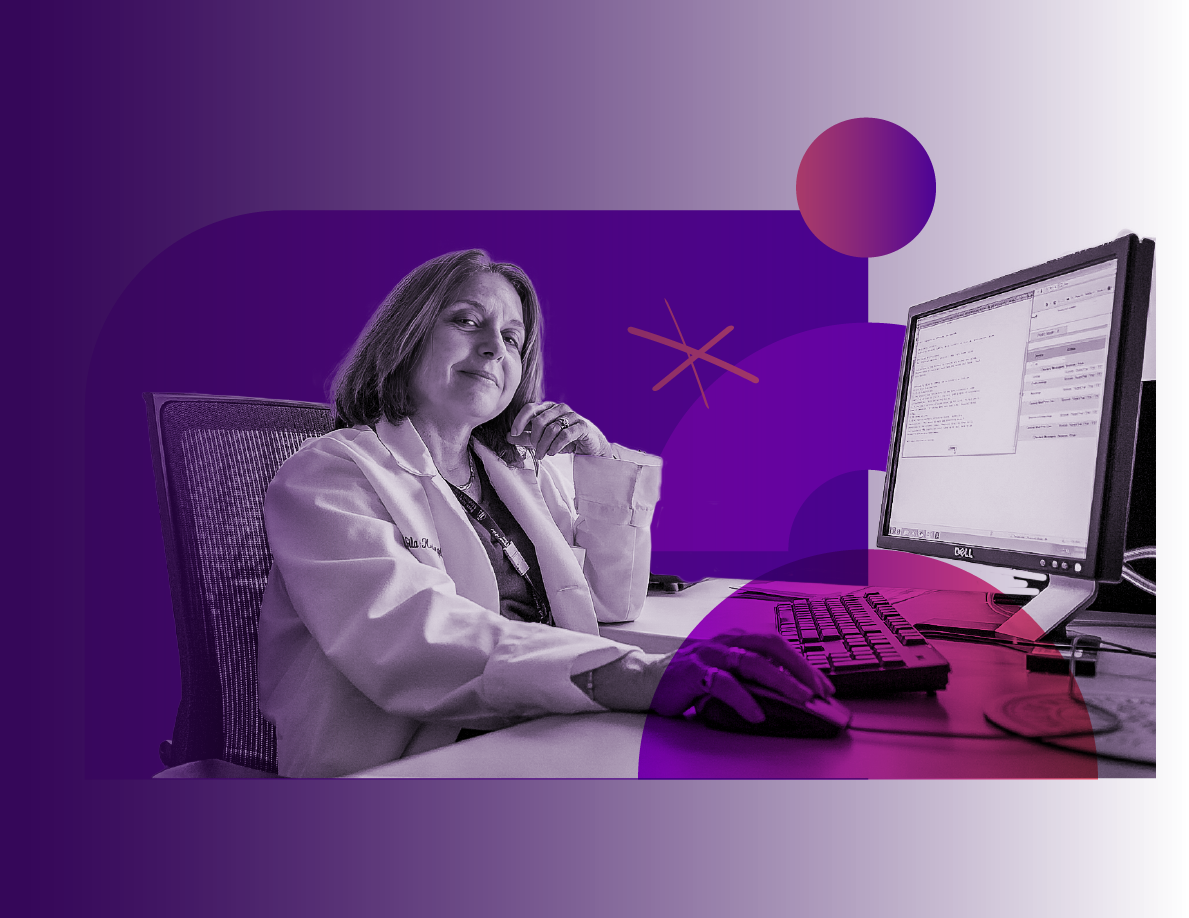
Gila Kriegel, MD, photo by Richard Schultz
Most patients say they like open notes.
The original open notes study involving patients at Beth Israel Deaconess Medical Center in Boston, Geisinger Health System in rural Pennsylvania, and Harborview Medical Center in Seattle found that 80% of patients offered open notes read at least one note over the year-long study period.
At the end of the study, 99% of patients wanted the practice to continue, whether or not they chose to read their notes.
Survey data from Kaiser Permanente and the Department of Veterans Affairs (VA)—the first health system to adopt open notes across all specialties—showed similar results, as have many others.
77–87% of patients said open notes helped them feel more in control of their care.
14% of those taking medications reported improved adherence.
85% of patients said they would choose a clinician based on the availability of open notes.
-
Patients report benefits from reading their notes. When patients read and review their health information, especially the notes written after a medical visit, studies indicate it can improve communication between patients and clinicians. It can also enhance engagement and help patients become more active in their own care. Research continues to show that engaged patients have better health outcomes.
Inviting patients to read their doctors’ notes: A quasi-experimental study and a look ahead | Ann Intern Med (2012)
OpenNotes after 7 years: Patient experiences with ongoing access to their clinicians’ outpatient visit notes | J Med Internet Res (2019)
-
Clinicians report little change in workflow. Many clinicians are concerned that open notes will increase their workload. They worry about the length of the visit, increases in email traffic, having to change the way they document visits, and spend more time writing notes.
Through our research and listening to the experiences of many health systems, the majority of clinicians report neither longer visits nor increased email traffic as a result of the note. If they notice a change at all, they are more likely to state that patients are more prepared for visits and more engaged in their care.
Clinicians note reducing the use of acronyms and potentially judgmental language, and changing the way they document sensitive information, as well as defining medical terms and making language simpler where appropriate. Nevertheless, some data suggest that writing open notes feels like it takes more time, even though studies using time stamps or character counts show very little change in the time clinicians spend writing notes.
When doctors share visit notes with patients: A study of patient and doctor perceptions of documentation errors, safety opportunities and the patient–doctor relationship | BMJ Qual Saf (2017)
“Although some people worry that poorly written, offensive, or even erroneous notes might erode trust and damage the patient-doctor relationship, studies suggest the opposite. Overall, patients continue to feel the same or better about their doctors, and clinicians believe sharing notes is a way to improve patient satisfaction, trust and safety.”
—Sigall Bell, MD, Chief Safety Officer, Open Notes Labs
-
Clinicians report little change in workflow. Many clinicians are concerned that open notes will increase their workload. They worry about the length of the visit, increases in email traffic, and having to change the way they document visits.
Through our research and listening to the experiences of many health systems, the vast majority of clinicians report neither longer visits nor increased email traffic as a result of the note. If they notice a change at all, they are more likely to state that patients are more prepared for visits and more engaged in their care.
Clinicians note reducing the use of acronyms and potentially judgmental language, as well as defining medical terms and making language simpler where appropriate. Nevertheless, some data suggest that writing open notes feels like it takes more time, even though studies using time stamps or character counts show very little change in the time clinicians spend writing notes.
The Views and Experiences of Clinicians Sharing Medical Record Notes With Patients | JAMA Network Open (2020)
Open notes sounds great, but will a provider’s documentation change? An exploratory study of the effect of open notes on oncology documentation | JAMIA Open (2021)
63% report spending no additional time writing notes.

-
Increased transparency can improve clinical documentation. Since the Health Insurance Portability and Accountability Act (HIPAA) entitles virtually all patients to obtain copies of their complete medical records at any time, it is always best to write notes with the assumption that patients may read them. In the initial OpenNotes study (Ann Intern Med 2012), most clinicians reported that they did not change the way they wrote their notes.
A survey of clinicians conducted seven years after the initial open notes implementation found that the majority of clinicians (63%) did not spend more time writing their notes. They did, however, report making changes to the language they used. Approximately half said they reduced the language that could be perceived as offensive or judgemental of patients, or changed the way they wrote about sensitive clinical, social, or mental health information. While clinicians remain concerned about patients being upset or offended by something they read in a note, very few noted any examples of patients contacting them about something they read and few reported being offended by their notes. Patients often reported researching things they did not understand, or bringing those topics up their next appointment. Most clinicians who say they’ve changed the way they write believe the changes have made the notes better, not just for the patient, but for other clinicians who also rely on the notes.
Issues such as mental health and illness, obesity, substance use disorders, sexual history, driving privileges, suspicions of life-threatening illness, and suspected elder, child or spousal abuse can present challenges with open notes. These are not new dilemmas, but they gain urgency in an era of transparency.
Your patient is now reading your note: Opportunities, problems, and prospects | Am J Med (2016)
The Views and Experiences of Clinicians Sharing Medical Record Notes With Patients | JAMA Network Open (2020)
Words matter: What do patients find judgmental or offensive in outpatient notes? | J Gen Intern Med (2021)
Tips for writing an open note

Avoid or define medical jargon. Spell out acronyms and abbreviations. We’ve learned that patients don’t expect clinicians to change the way they write notes. Still, small changes can help make the note more useful for patients between sessions. Many patients have told us that they greatly appreciate seeing something they said quoted in their open note. They feel listened to, even when there are differing perspectives.
Promote transparency. It’s natural to want to avoid challenging conversations with patients, but transparency may encourage more open and active communication. Unless you believe a conversation might harm your patient, a good rule of thumb is to write about things you discussed and to discuss with your patients the content you will write about.

Use plain language. Open notes can reinforce trust when the notes are transparent and respectful, but they can diminish trust when notes are disrespectful or don’t accurately represent a session. Using ”plain language” helps.
As an example, some patients have expressed concerns that the term “affect dysregulation” might be judgmental. In this case, it’s an easy switch to simply use the word “upset.” Still, it’s important to explain to patients that there are professional standards and health insurance requirements that need to be satisfied. Explaining and setting expectations is key. It is also a requirement for proper informed consent.

Engage patients in the documentation. Let your patients know it’s okay to ask, “How are you going to document this?” This doesn’t mean the patient decides what can or cannot be written. While the patient has a right to access the record, the clinician must still satisfy professional requirements and standards. It may be helpful to communicate about documenting particularly sensitive issues.
Discuss the diagnosis. We recommend discussing diagnoses and other important details with patients before documenting them. This way, patients aren’t learning something for the first time in the note. This can be especially true and challenging when documenting a differential diagnosis or condition.
Create a plan. We suggest having a discussion with your patients and together deciding on a plan for worried or upset feelings related to their notes. They may also disagree with something in their note. Setting realistic expectations is highly important, just as it is with any other aspect of a patient-clinician relationship.