
Recurso¿Cómo puedo usar mis notas abiertas?
Si puede acceder a su historial clínico a través del portal para pacientes de su sistema de salud (como MyChart), es probable que pueda consultar las notas de su médico. Este recurso responde las preguntas más frecuentes que tienen las personas sobre las notas abiertas.
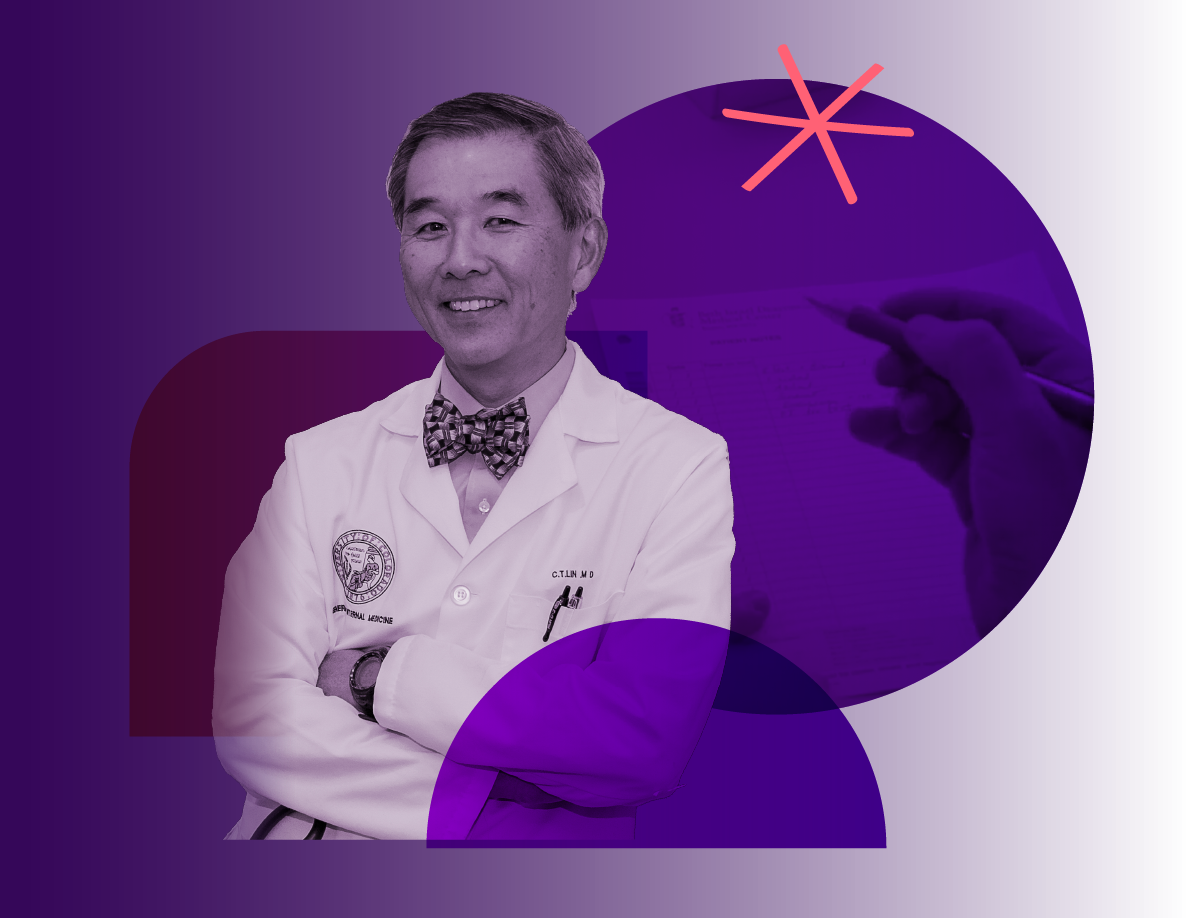
CT Lin, MD
97% de los pacientes y sus colaboradores en la atención informaron que la confianza en su médico aumentó o permaneció igual después de haber leído al menos una nota abierta.
¿Sabía usted que…?
Los sistemas de salud tienen la obligación de compartir sus notas con usted
Leer sus notas puede ayudarle a gestionar su atención médica
Leer sus notas puede ayudarle a tomar más control de su salud
Los estudios demuestran que la comunicación abierta con su médico o el personal de enfermería le beneficia a usted y a quienes colaboran en su atención
Los pacientes que leían más las notas abiertas afirmaban que la colaboración y el trabajo en equipo con sus médicos eran mejores
Preguntas frecuentesCuando se comparte una nota con usted, se convierte en una “nota abierta.”
Después de una visita médica, los médicos, los profesionales de enfermería y otros proveedores de atención médica redactan notas en las que resumen información importante sobre usted. Estas notas se convierten en parte de su historial clínico. Las notas resumen toda la atención médica que ha recibido y vinculan otros elementos de su historial clínico. Cómo se ven las notas depende de muchas cosas, como por ejemplo quién escribió la nota, el tipo de consulta o dónde recibió atención. Algunas notas son breves. Otras podrían incluir una descripción completa de su consulta. Las notas más largas pueden incluir detalles adicionales sobre su salud, tales como problemas pasados o resultados de pruebas.
Conceptos básicos
Lea sus notas después de una consulta y repáselas antes de ir a su próxima cita. A menudo, las notas contienen cosas que pueden olvidarse. Pueden recordarle sobre planes, medicamentos, pruebas u otros pasos importantes. Cuando revise su nota, asegúrese de que la información sea correcta y esté actualizada. Informe a su equipo de atención médica si hay un problema que sienta importante. Verifique que los medicamentos que está tomando hayan sido escritos correctamente en sus notas. Y asegúrese de que los medicamentos coincidan con su nombre y se describa cuánto toma y con qué frecuencia.
-
La nota abierta puede incluir:
Un resumen de lo que le dijo al profesional médico o de enfermería, también llamado “historia”.
Los resultados de un examen físico realizado por un proveedor. Algunos ejemplos pueden incluir: la presión arterial, el peso, los ruidos de los pulmones o el corazón, una descripción de un crecimiento en la piel u observaciones de su estado de ánimo.
Las opiniones del proveedor sobre los resultados de sus análisis de laboratorio, radiografías, exploraciones, biopsias u otras pruebas.
Ideas resumidas sobre cualquier afección o síntoma médico. Esta sección también puede ser denominada “evaluación” o “impresiones”.
Recomendaciones hechas durante la consulta. Esta sección a menudo se denomina “plan de tratamiento” o “plan de atención”. Las notas podrían incluir exámenes solicitados, medicamentos recetados, citas de seguimiento, referidos, ejercicios o cambios recomendados en su dieta.
-
La manera más frecuente de acceder a sus notas es a través del portal en línea seguro que su proveedor de atención médica pone a disposición de sus pacientes. Al usar este portal seguro y gratuito, puede, entre otras cosas, solicitar citas, comunicarse por mensajes con su equipo de atención médica y ver su historial clínico, incluidas las notas. Si su médico(a) o profesional de enfermería no usa un portal web, puede solicitar gratuitamente una copia digital o impresa de estos registros. Si no está registrado(a) en el portal, póngase en contacto con su proveedor para averiguar cómo crear una cuenta en el portal.
-
Las investigaciones demuestran que la mayoría de las personas recuerdan menos de la mitad de lo que hablan con su médico. Una nota abierta le ayuda a recordar información importante. También le da libertad para revisar los detalles de su consulta en cualquier momento.
Los estudios demuestran que leer las notas abiertas puede ayudarle a:
Gestionar su atención médica de una manera que le hagan sentir más seguro(a) de sí mismo(a), mejor preparado(a) y con las cosas bajo control.
Entender mejor sus medicamentos y lo que necesita hacer entre las consultas.
Recordar programar citas de seguimiento y pruebas, tales como mamografías o exámenes oculares.
-
Lea sus notas entre cada visita si lo necesita para recordar su plan de tratamiento. Leer sus notas puede recordarle sobre los próximos procedimientos, pruebas y citas.
Use su nota para hacer una lista de “cosas por hacer.” Lleve la lista a la siguiente visita.
Usted podría compartir sus notas con familiares, personas que colaboran en su atención médica u otras personas involucradas en su cuidado. Es importante que todo su equipo de atención médica entienda lo mismo.
Antes de su próxima consulta, lea la nota para recordar su última conversación con su profesional médico o de enfermería. Pregúntese:”¿Qué ha sucedido desde la última vez que fui a ver a mi médico? ¿Cuáles son mis dos o tres objetivos o preguntas más importantes para esta consulta?”
-
If there are terms in your notes you don’t understand, look them up online. You can also ask your provider for reliable websites or other resources to help you understand your notes. The list of Common Abbreviations on MedlinePlus might be a good starting point. If you have additional questions, write them down. Follow through, whether with a friend, your doctor, or any source you trust.
-
Does this note accurately describe the visit?
Are the medications, symptoms, and health problems correct?
Should I share my note with another member of my care team or family?
Is there anything I’m worried about that I want to clarify?
Is there anything I don’t understand? Could I get help with understanding medical terms, a diagnosis, or the care plan?
Is there information I forgot to share with my doctor, like symptoms or important family history?
Are there mistakes in my record that I should follow up on?
-
Reading notes may not be right for everyone. Follow your instincts. For some people, just knowing that the notes are available is enough. Thousands of patients report that the benefits of reading notes outweigh the risks. In fact, reading notes may build or reinforce your trust in those taking care of you. And studies show that few people report feeling harmed by what they read.
-
If you spot mistakes in your record, bring them to the attention of your medical team. An example of a mistake is if your doctor wrote “left knee” when they should have written “right knee.” When asking for corrections to a note, focus on inaccuracies that could affect your current or future care. If you feel the error is serious, make sure you contact the office of whoever wrote the note. Your healthcare provider’s office should have a process for fixing significant errors in your record.
-
Open notes do not change the confidential relationship you have with your health care providers. Doctors and nurses can share your information only with health professionals involved in your care. Sometimes this can include sharing information with administrative personnel, such as for billing purposes or to make sure you are getting quality care. The information in your records is about you, and you have the right to share it with others. You can share your medical information with a care partner, family member, or anyone you feel you might want to include. This is your choice. Remember to ensure your privacy when using an online patient portal.
Here are a few suggestions:
Keep your login name and password private.
If someone is helping you with your care, ask your health care provider if that person can have their own “proxy access” (or shared access) to your portal account rather than sharing your login information with them.
Always exit the patient portal website by selecting “sign out” or “log out” when you are done using a computer or cellular device.
Example note
How notes look depends on many things, including: who wrote the note, the kind of visit you had, or where you get care. Some are short, while others include a complete description of your visit. Longer notes may include details about your health such as past problems or test results. Some notes might contain material that doesn’t appear relevant. It may be required for insurance purposes or other rules and regulations.
-
This patient visited an orthopedic specialist to talk about a hip replacement. In this note, the doctor describes the visit and the patient’s symptoms. The doctor also outlines next steps for the patient, including follow-up appointments. The patient used the note to remind himself about the appointments he needed to make. He also shared the note with a family member who helps with his care. Finally, the patient saved the note in a file at home in case he wants a second opinion in the future.
-
This patient visited an ear-nose-throat surgeon. To prepare for an operation, the surgeon needed to determine if a breathing tube could be placed in her airway. The note summarized the patient’s medical history and described the surgery to be performed. The note contained difficult medical jargon, including “otorrhea” and “choanae.”
The patient said she did not understand those words, but still liked having the note. She used the Internet to look up the terms. To prepare for surgery, she made a list of questions. She was also able to share the surgeon’s note with her primary care doctor at a different hospital.
-
This patient has weekly therapy appointments with a social worker. They talk about the patient’s feelings of depression and anxiety, which worsened after a diagnosis of Parkinson’s Disease. In this note, the therapist describes the patient’s physical and mental health and outlines coping strategies discussed in the therapy session.
This patient was relieved to see that her therapist understands her condition well. Her Parkinson’s is affecting her memory, so being able to look back at the notes helped her remember what she was supposed to do between visits. Additionally, the patient could print the note and bring it to other doctors. Now, all members of the patient’s health care team are informed about her care.
-
This patient has type-1 diabetes and two other chronic health conditions. She says despite her complicated medical life, she feels healthy. She takes several medications and uses her notes to manage her health.
When she picked up her medication at the pharmacy, the instructions seemed incorrect. The endocrinologist involved in her diabetes care is not located at the same hospital where she receives the rest of her health care. This patient printed her notes to share them with her endocrinologist. The notes have helped her feel more like an expert in her own conditions. It’s important to her that her entire health care team has access to the same information.
Patient safety
You know yourself and your symptoms best. You have unique and valuable information about the details of your health during and between different healthcare encounters. This information is important to safe care and may not be known by all healthcare providers. You can work together with your healthcare providers to help achieve the safest care possible.
-
“Diagnostic error” is the failure to establish an accurate and timely explanation for a patient's health problem(s) and/or communicate that explanation to the patient.
Diagnostic errors are common, costly, and harmful.
Diagnostic errors are estimated to affect 12 million Americans each year, and are a worldwide safety priority.
Missing or delayed tests, results, or referrals are an important cause of delays and errors.
Many factors can lead to delayed tests, results, and referrals. For example, healthcare visits are often rushed and may feel overwhelming. Patients may have trouble remembering all the next steps. Experts estimate that 40-80% of information shared with patients during a doctor’s visit is forgotten or remembered incorrectly. In addition, doctors may forget to order tests or referrals, or to communicate with patients about the results.
People who read their open notes report they better understand the reason for medical tests and referrals and are more likely to get them done.
You can ask your doctor if you have a question about a test or referral in your note. If a test or referral is missing from your note, you can remind your doctor. Working toward timely tests and referrals is one way people can help their healthcare providers make accurate and prompt diagnoses.
-
Medical records can have errors that are copied electronically by clinicians from one visit note to another. Many patients have spotted mistakes in their medical records. Some mistakes may not be serious (such as misspellings), while others may be very important.
Examples of serious mistakes include:
listing the wrong medication
wrong information about your medical history
listing the wrong side (left vs right) before a planned surgery
While doctors must write and review many notes every day, patients and care partners only look at their own notes. They can catch and report errors before they lead to serious consequences.
-
Patients who read notes say they feel more involved in decision-making with their doctors. This means that doctors take into account what matters most to patients when suggesting next steps in their care plan.
Relationships that are grounded in trust are stronger. Open notes help to build trust because patients often feel that the doctor is sharing information and there is nothing to hide. When patients feel more comfortable speaking up about their concerns, they are more likely to feel they are on the “same page” with their healthcare team. These behaviors, grounded in strong relationships, set the stage for safe care.
-
Reading your notes can help you understand why and how you should take prescribed medications.
Not taking medications as directed can have serious effects on your health. For example, taking the wrong dose or forgetting to change a medicine or to start a new medicine as recommended by your doctor can have negative or even dangerous effects on your health.
-
Patients who are marginalized by society—including less formally educated individuals, non-English speakers, people of color and others—may also be at risk for delays or errors in care due to language barriers, not being able to advocate for themselves, or other disparities in the healthcare system.
Some patients facing healthcare disparities may especially benefit from open notes. For example:
Although notes are not routinely available in other languages yet, patients who speak a language other than English may prefer to review the visit with an English-speaking relative or trusted friend.
Patients from marginalized groups were more likely to report that reading notes is extremely important to help them understand their health conditions, feel informed about their care, and participate in healthcare decisions.
Nonwhite patients and families, or those with high school education or less, report that reading notes helped them to complete tests, become more active in their healthcare, and take medications as prescribed.
These are just some examples of how you can use your unique knowledge and your notes to be an active part of your healthcare team, and to help your clinicians provide safe care.
Mental health
It can take some time to get used to how mental health notes are written. But it can be empowering when you recognize your own ability to read notes, discuss them with your therapist, and use them constructively in many different ways. We have learned that open notes can build trust in yourself and between you and your clinician. Reading your notes may even improve your self-awareness and self-confidence.
-
After a behavioral or mental health visit, your therapist writes notes that summarize important information about you. These notes become a part of your medical record. When a note is shared with you, it becomes an “open note.”
Starting in 2021, therapists are required by federal law to share these notes with patients upon request, free of charge. Open mental health notes are written to be a record of your work together with your therapist.
Like all medical notes, mental health notes must meet:
professional standard requirements of your clinicians’ field
contain enough detail so another clinician could understand your care, and
health insurer requirements (if applicable).
These notes are different from “process recordings,” or side notes your therapist might take to keep track of their own thoughts. Side notes do not have to be shared.
-
The content of mental health notes can vary depending on your clinician and the type of care you receive. Like medical notes, mental health notes often include a diagnosis, a summary of what you shared with your clinician, medication updates, mental status information, your clinician’s assessment of your health, a treatment plan or next steps, and other information from your appointment. The notes may also include information required primarily to satisfy health insurance requirements.
If you’re interested in reading your therapy notes, register for your health system’s secure, online patient portal. If a portal for patients does not exist, ask your clinician to share your notes via print out. For more information on accessing your medical record, visit "Where Is My Medical Record?"
-
Reading mental health notes may help you:
Organize care and track progress. Just as in any other appointment, there’s a lot to remember. Going back to read the notes after the appointment may help you manage your illness more effectively. Reading notes can help you understand your condition, your treatment, and your progress between visits. It can remind you of your responsibilities in your own care, including ‘homework’ or follow-up issues to work on between sessions.
Use your notes as a tool for change. You may find that discussing the information in your therapy notes with your clinician can decrease stress you might otherwise hold alone. In addition, you may find that the notes help you to benchmark your progress and motivate you to confront challenges and address difficult changes you hope to make.
Enhance trust and the therapeutic relationship. A trusting relationship between a patient and therapist is critical to progress and recovery. Being able to read what your therapist writes can help reveal what they are thinking. For many people this can lead to a stronger relationship and richer conversations. It can also help you and your therapist start up an open discussion about topics that may be difficult.
Make sure you’re on the same page. Sharing notes serves as a cross-check, improving the likelihood that you and your therapist agree on what was discussed. The notes may also include comments from your therapist about differences in each other’s view and understanding. Understanding these differences can be an important part of any therapy.
-
Everyone’s experience is different, and many people have questions or concerns.
As you read your mental health notes, keep in mind that they vary in length, may include sensitive information, or could have unfamiliar terms or confusing language that’s often required for meeting professional standards.
You should feel free to discuss with your therapist any issues that arise for you when reading your notes. You may also choose not to read them! Reading such notes may not feel right for whatever reason, and that’s okay too. You know yourself best. It’s important to respect that, and to talk with your therapist about your preferences.

“The most important thing is to talk with your therapist about all the typical ways you manage your well-being between visits and how those same strategies can be used while reading your notes.”
—Steve O’Neill, LICSW, BCD, JD
Using open mental health notes as a tool in therapy
Develop a plan for what you should do if you become worried or upset by reading your notes, or if you disagree with something written in the notes. This may include talking with a trusted friend or family member, taking a walk, or relying on other strategies that work for you.
Talk with your therapist about your expectations for note-sharing. This conversation can also help you learn more about your treatment and your clinician’s perspectives.
Use the R.E.A.D. strategy. The U.S. Department of Veterans Affairs (VA) was one of the first health systems to open all notes to all patients. The VA developed the R.E.A.D. strategy (Reflect, Explore, Ask, Decide) to help patients get the most out of their mental health notes.
Understand that sometimes notes are closed. If your therapist feels that reading the information in a note might be harmful to you, they may keep the note unavailable on the patient portal. If a note is unavailable, talk with your therapist. Again, you might suggest reading the note together.

Ask questions. You can ask your therapist, “How are you going to write about this in my note?” But it’s important to remember that while the patient has a right to access the record, the health professional must still satisfy professional requirements and standards.
Make the best choice for yourself. Open notes are not for everyone. For some patients, just knowing the notes are there and available is enough. Some use the notes as reminders of the work to do between visits, and, for a variety of reasons, others choose not to read their notes. Open notes are a good example of freedom of choice!
Teenagers
Most healthcare institutions or clinics have secure online patient portals where you can find your notes. You can register to get access to your health information, including your notes, through the portal. The age at which patients under 18 can register for a portal account varies. Make sure to ask a member of your care team if and how you can register for a portal account.
-
It depends. Health privacy laws are different across states. Healthcare institutions and clinics also have different policies about allowing access to patient portals and visit notes for people under 18. Some places limit what parents can see, while others allow parents ongoing access to some notes. Ask your care team about what your parent can see.
If you’re 18 years old or older, your parents will generally no longer have access to your health information, and you’ll be the only one to have access. If you want your parents to continue to have access, you can ask your health care team how your parent can become a patient portal proxy for you.
-
If there is some private information that you share with your healthcare provider that you don’t want shared with your parents, here’s what to do. Some information shared between patients and providers is considered private or confidential. Make sure you tell your provider when there is information you want to keep private and not share with others who may have access to your health information. Most healthcare institutions will make sure your private information is not shared without your consent.
-
Reading your open notes is an important part of your healthcare journey and can help you manage your health in many ways:
Help you better understand your health issues
Remind you of the next steps or care plans discussed at your visit
Remind you what medications you’re taking, the dose of your medication, what tests you need to get done, and when to schedule your next appointment
Help you understand your test results or reasons why you’re having a test done
Help you understand how your care team is thinking about your symptoms or reasons for your symptoms (i.e., diagnosis)
Remind you of the details of the examination that was done, including your blood pressure, weight, heart rate, and the exam of your individual body parts
Ensure your care team understands and hears your concerns and priorities by making sure the note accurately reflects and captures what you discussed with them during a visit
Help you be actively involved in decisions made about your treatment plan and to feel more comfortable asking questions
Help you correct any mistakes or inaccuracies in the note, including the reason for your visit, any new or ongoing symptoms you’re experiencing, your health issues, or the medications you’re taking
Help you prepare for your next visit and communicate your health history and key items you want to discuss during the visit
-
When you visit the doctor, share your top priorities, your concerns, and your new or evolving symptoms. This helps your care team document this information in your visit note.
Then, read your note to make sure it accurately reflects what was discussed at the visit. If you notice any mistakes or inaccuracies, reach out to your care team to have it fixed.
Artificial intelligence
Artificial intelligence, or AI, is a type of technology. It learns from large amounts of information and solves certain problems. You may have come across AI in everyday life. It helps show traffic updates on smartphones. It can suggest products to you based on your online shopping history. It can flag unusual activity on bank accounts.
-
AI is being adopted in healthcare. It may help doctors diagnose diseases. It can support medical research. It can help catch possible medical errors.
Some doctors are using AI to take notes during patient visits. Others are using it to search for recent medical studies. When used by a health care organization, these tools are designed to follow privacy rules.
AI shows promise, but it is a developing technology. Researchers and doctors continue to study how well these tools work. They are looking at how to use them safely and responsibly.
-
A large language model (LLM) is a type of artificial intelligence. It is a computer program that has learned human language by reading large amounts of text. LLMs look for patterns in language and use those patterns to have conversations, answer questions, or predict the next word used in a sentence. You may already have heard of some of these tools, such as ChatGPT, Claude, or Gemini.
LLMs feel different from older computer programs. They seem more chatty, friendly, and “real” because they are based on our human language.
-
There are very few studies on this topic. One study tested a possible approach to using AI to understand an open note.It found that people could get more accurate health information when they asked the AI to respond as a doctor. This study was “proof-of-concept,” which means it was an early test of an idea. Much more work is needed to test this idea.
-
Some people use AI chatbots to better understand their health. One approach is to ask the chatbot to “interview me as if you’re a doctor.” This approach may help you prepare for doctor visits. However, this is not a replacement for medical advice.
Experts at Beth Israel Deaconess Medical Center suggest the following steps:
Pull up your medical notes.
Remove any personal information that can identify you.
Copy the notes into an AI tool.
Give the AI a current update on your health concerns.
Ask the chatbot to summarize the information.
Then ask: “Given this context about my health, give me three questions I should ask my doctor about my condition during my upcoming visit.”
-
Large language models (LLMs) want to please their users and were designed for “engagement”. They pick up on information that resonates with you. LLMs do not have built-in fact-checkers and may give you inaccurate information. This is troublesome for people using AI to answer health questions. It will expose you to more of that information because it is assuming that is what you want and that information may not always be correct.
Experts are advising patients to tell AI why they are asking questions. Instead of saying ‘I have a headache. What should I do?’ try saying ‘I am having a bad headache today. Here is my last note from my primary care doctor. What are some strategies to make it better?
-
Experts encourage patients to think carefully before sharing personal health information with AI tools. Ask yourself who you trust with your information and what might happen to it over time. Once you share information with an AI platform, the company that runs the tool may store or use that information.
It is important to remove details that could identify you. This includes your medical record number, Social Security number, phone number, and home address.
-
Bias in health care happens when people are treated unfairly. This happens because of people’s attitudes and beliefs about race, age, gender, language, body size, disability, income, and other factors. These biases can affect the care people receive and lead to worse health outcomes for some groups. In the past, health information has been used to discriminate against people with illnesses or disabilities. This kind of bias can affect artificial intelligence (AI).
AI is now used to help make decisions in health care. For example, AI tools may help decide who gets certain treatments, who is approved for health insurance, or who is seen as high risk for illness. Most patients cannot see these tools, but they may still affect the care they receive.
Insurance companies may use AI to predict health risks or to review claims. Some AI tools are used to flag patient claims for denial. Health care systems may use AI systems that are trained on biased data. When AI is trained on data that reflects existing inequalities, it can worsen health disparities.
Many AI companies are for-profit businesses that work to make money for shareholders. While doctors must follow strict rules because of their medical licenses, companies that build AI tools may not have to follow the same rules.
Because of this, it is important for you to think carefully about whether health AI tools are working in your best interest.
-
Open Notes Labs is a research program that studies how sharing health information affects patients and clinicians. Our work is supported by grants from foundations, government agencies, and technology companies. These funders do not control our research methods or findings. We share what we learn to help patients and care teams make informed decisions.